
Field Note 02 / Condition / Collecting
Original, Restored, Replaced: The Collector’s Distinction
One adjective cannot describe every component
An attractive vintage frame may retain its original front and temples while carrying recently fitted lenses. Another may combine a period frame with a contemporary clip. Describing either simply as “original” leaves the buyer to guess which parts the word covers. A more useful description names the component and the intervention.
For the Society’s catalogue, the distinction is practical: frame, lenses, hinges, screws, pads, clips and cases may have different histories. The same logic applies to an illuminated petrol pump, whose cabinet, globe, graphics, hose and electrical fittings should not be treated as one indivisible claim.
A contemporary addition can be intentional
Archive 11 pairs a vintage black American Optical frame with a later custom green clip-on. The appeal lies in the combination, but the clip should be presented as a later addition rather than implied to be a period factory accessory. That distinction allows a collector to appreciate the piece on its actual terms.
The frontal photograph shows how the clip changes the silhouette and colour. It does not establish the date of manufacture of the accessory. Here the owner’s component history provides information that appearance alone cannot supply. A catalogue should state that source plainly.
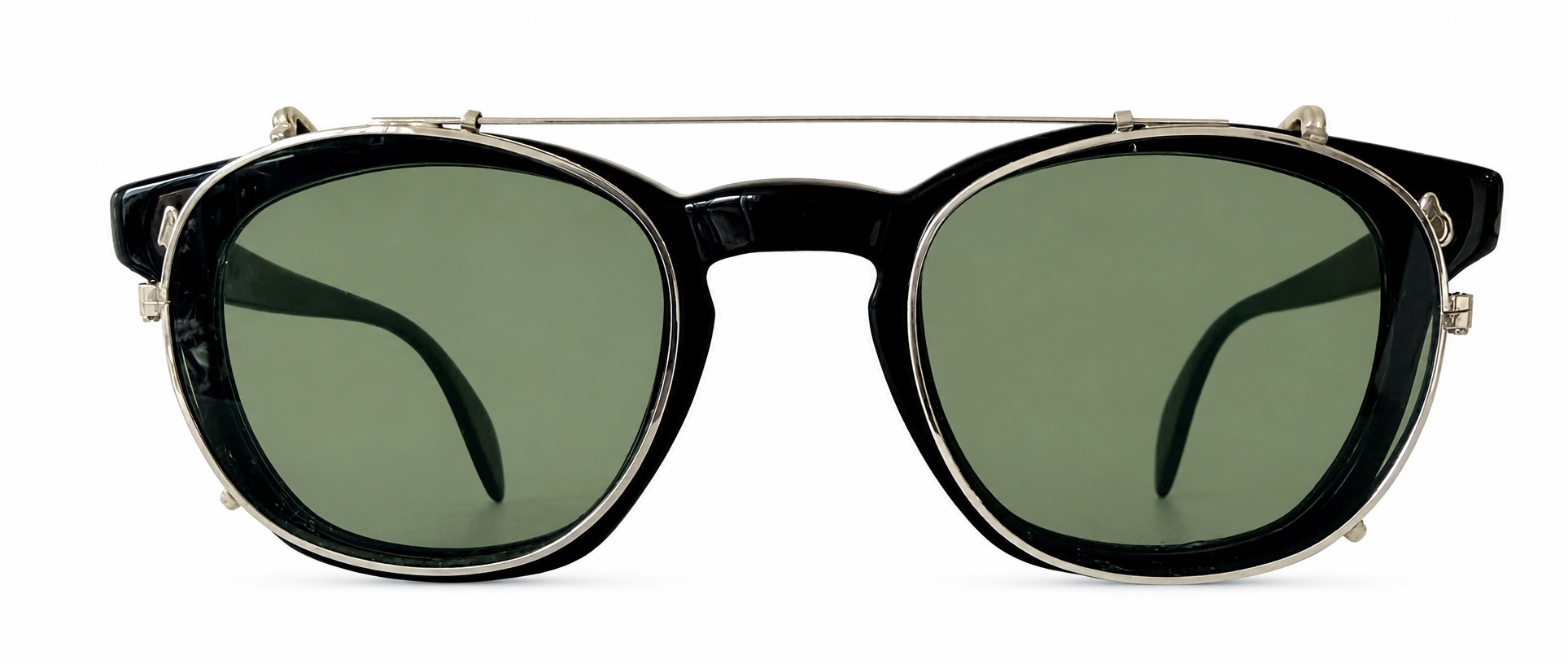
- The accessory is disclosed separately from the frame.
- An attractive match does not establish a shared manufacturing date.
Replacement lenses need their own sentence
Archive 31 is recorded with later green lenses. That is a component disclosure, not a reason to describe the whole object as new. It is also different from proving that a lens offers a particular level of protection. Tint alone does not establish ultraviolet performance, impact resistance or suitability for a prescription.
Where lens specifications are recorded by the seller, they should be distinguished from visual observations and supported by supplier information when available. Historical side shields do not turn a collectible frame into certified modern protective equipment. The collector’s description and a present-day optical assessment answer different questions.
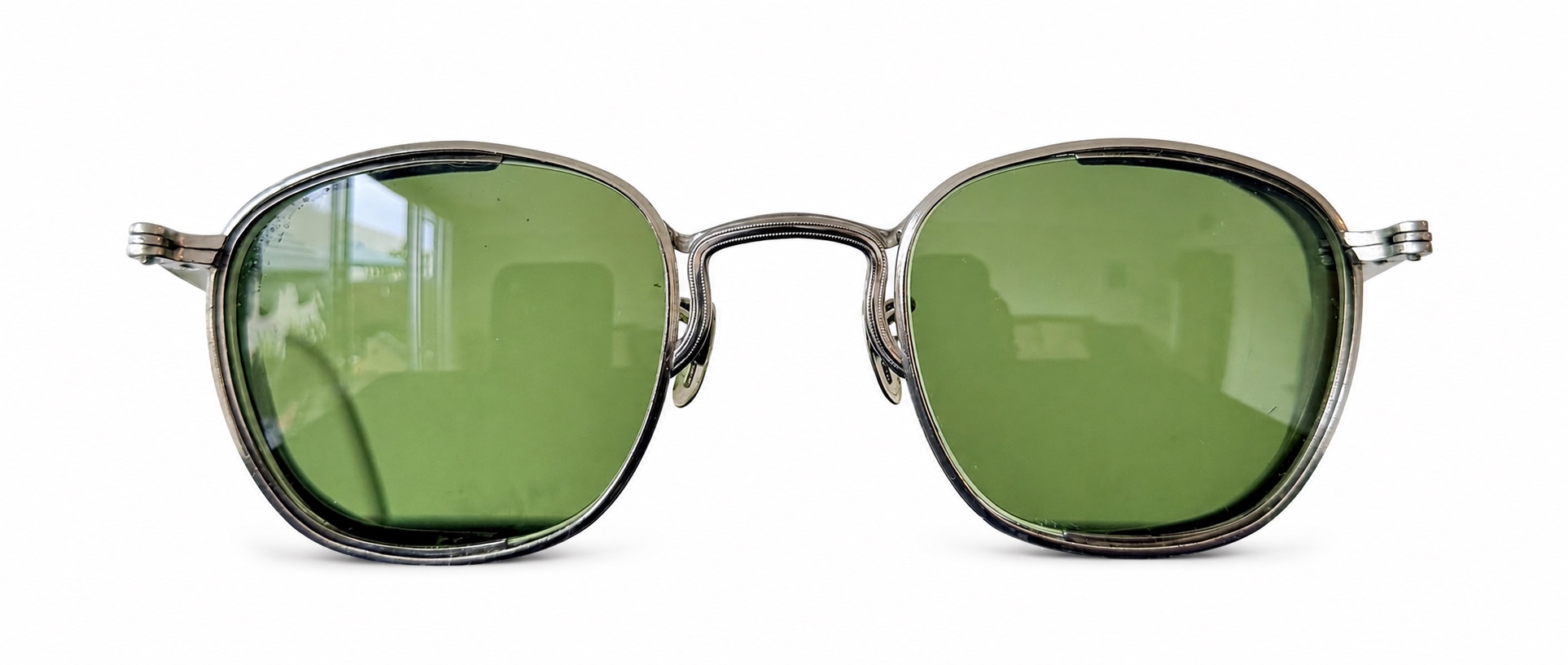
- Identify the front lenses separately from the side construction.
- Colour is visible; optical specifications require a different record.
Surface finish is evidence with limits
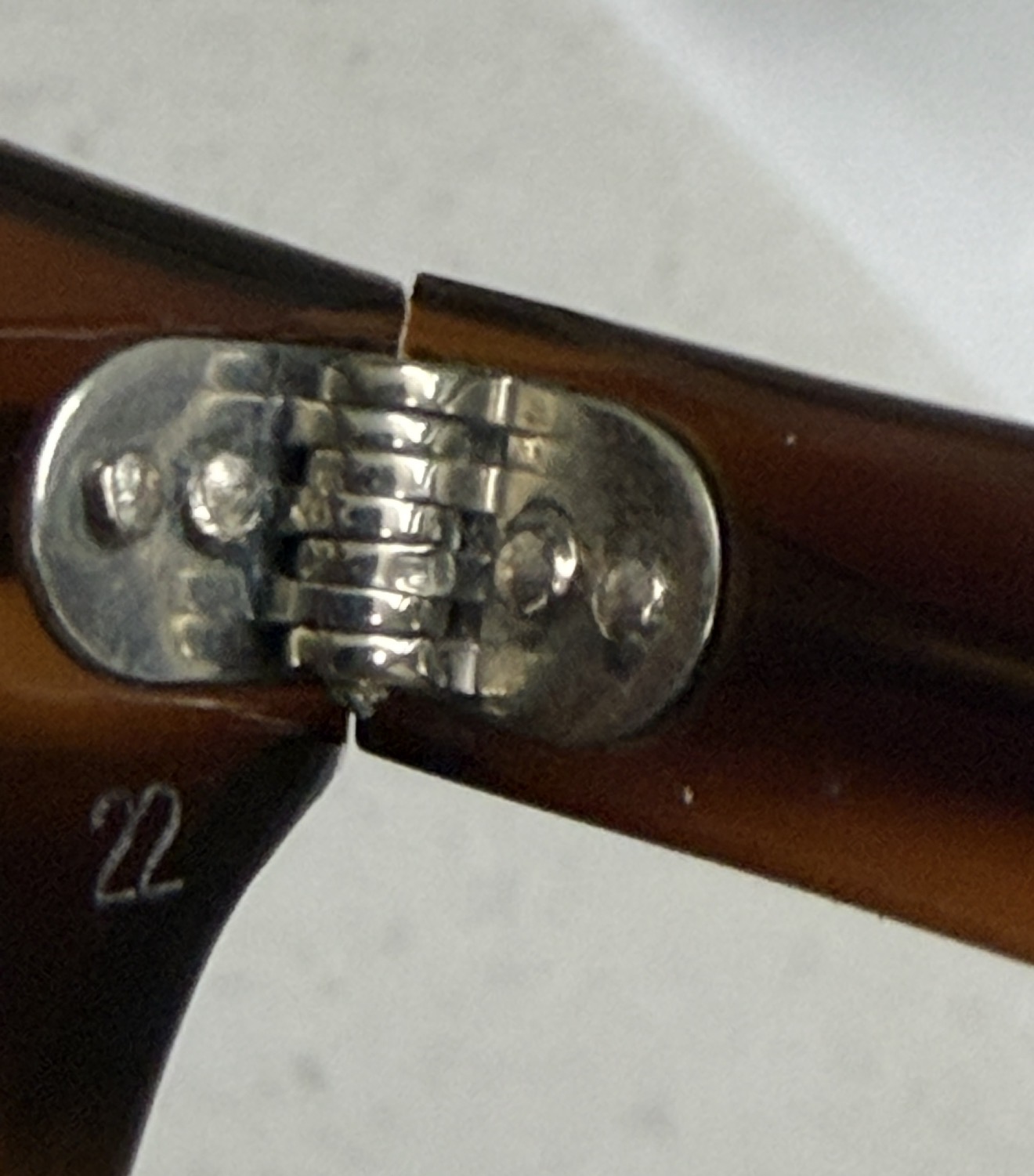
The Arnel hinge photograph preserves patina and tool marks. Those details contribute to an honest condition record, but they cannot date every intervention. Equally, a bright surface does not by itself prove replacement. Lighting, material, cleaning and use all affect how an object appears.
Museum conservation combines examination of materials and techniques with research and, where appropriate, analysis. The V&A describes that combined approach in its conservation practice. It is a useful reminder of the limits of judging material history from a sales photograph; it is not a claim that the Society has carried out museum laboratory testing.
Sources: [1]
New old stock and generational collecting
The collection includes pieces retained through generational collecting, with third-party restoration undertaken as needed. Original features and markings are preserved as fully as possible. New old stock and lightly restored are distinct descriptions, not interchangeable grades. New old stock describes unused stock retained over time; it can still show storage marks or material ageing. Light restoration describes intervention and should be accompanied by its scope when known.
An individual listing should carry the category that belongs to that object. The collection-wide restoration approach does not itself establish new old stock status for any particular frame. Generational collecting supplies context, while a documented chain of ownership is a separate, more specific record.
The disclosure a buyer should receive
A worthwhile condition note identifies what is present, what has changed, who supplied that information, and what remains uncertain. A dated invoice or a sequence of photographs can turn a vague account of restoration into a useful component history. When those records are absent, the wording should remain narrower.
We recommend keeping the original photographs alongside any presentation edits, and retaining records of specialist work with the object. That record serves both the present owner and the next. Preservation of information is one part of caring for a collectible.
- Name the component: “later custom clip” is clearer than “upgraded.”
- Describe the intervention and its source when known.
- Do not substitute “mint” for a record of visible wear.
- Keep dated photographs and specialist invoices together.
Sources & scope
Object observations refer to the Society’s photographs and owner-supplied catalogue information. External references are identified below; they do not independently authenticate an object in this collection.
- V&A · Conservation
Institutional explanation of examination, research and conservation; general context, not an assessment of these objects.
Research questions or corrections: hello@theraregoodsociety.com