
Field Note 03 / Maker study / Construction
American Optical, Seen Closely
A maker is not a single silhouette
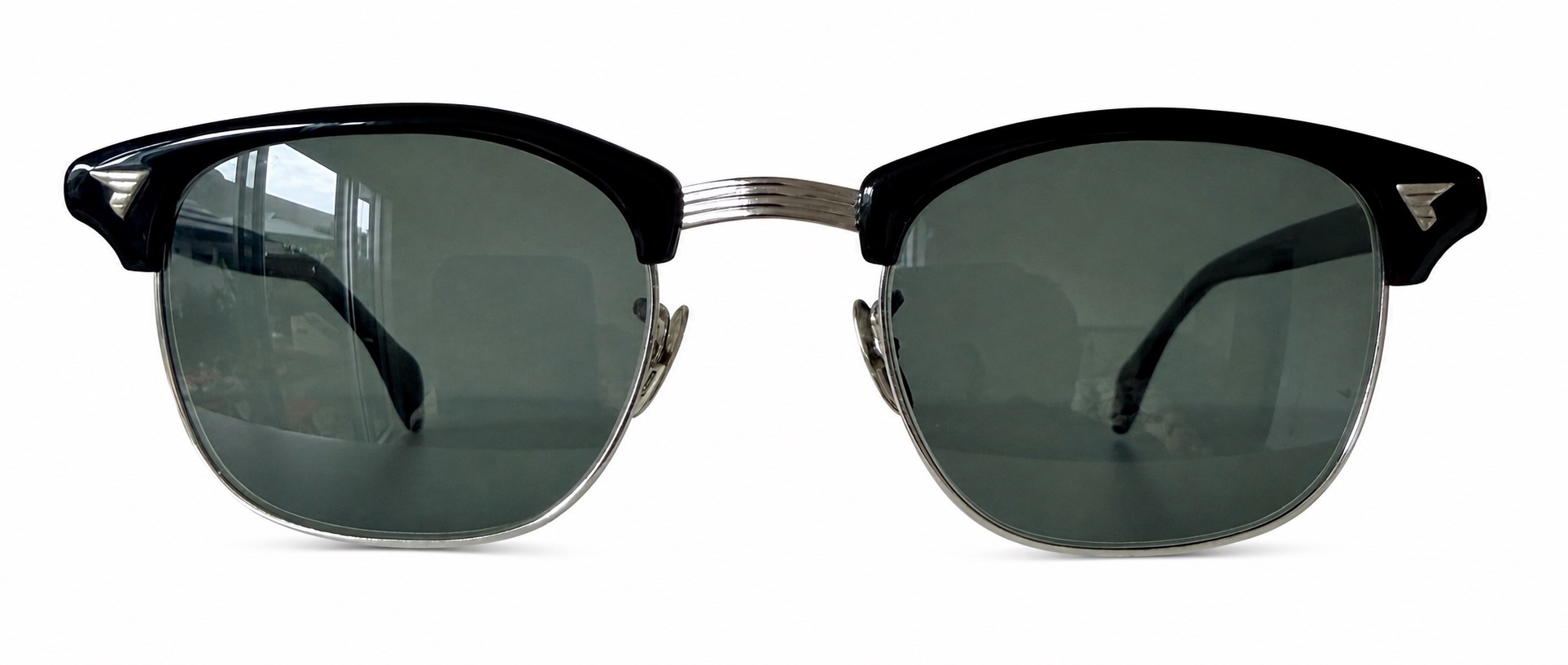
Grouping frames by maker is useful for a catalogue, but it can conceal the most interesting differences. The three examples here organise their structure in markedly different ways: the Sirmont emphasises the brow, the Ful-Vue Liner raises the temple attachment, and the tortoise Wellington makes its front material and keyhole bridge central to the design.
The photographs let us compare those relationships directly. The date of an individual frame is a separate question. A model history can establish a useful context without determining when every surviving example was made.
Plate I: Sirmont and the weighted brow
In Archive 03, the dark upper sections place visual weight above the eyes while the lower metal rims remain comparatively light. The bridge belongs to the metal structure; the brows give the front its distinctive contrast. Read the junctions between those elements rather than reducing the frame to the generic word “browline.”
American Optical’s current Sirmont history identifies an early-1950s introduction and explains that its present revival includes ergonomic changes. That is useful manufacturer context, and also a reason not to borrow current dimensions or construction details for a vintage specimen. The Society’s frame is catalogued separately from the modern revival.
- Compare the thickness of the upper and lower edges.
- The bridge and the brows perform different visual roles.
Sources: [1]
Plate II: Ful-Vue and the high attachment
Archive 04 is recorded as a Ful-Vue Liner. Its slim metal front and high temple attachment produce a different rhythm from the Sirmont: the upper outer corners and cable temples are prominent, while the rims trace the lens openings closely. The green lenses are recorded as later fittings.
GIG LAMPS catalogues a separate Liner example in a 1950s–60s context. That comparison is useful for the design family, but it records a different size. A shared name cannot justify copying dimensions, condition or ownership history. For this frame, the owner’s recorded markings and the actual photographs remain the primary object record.
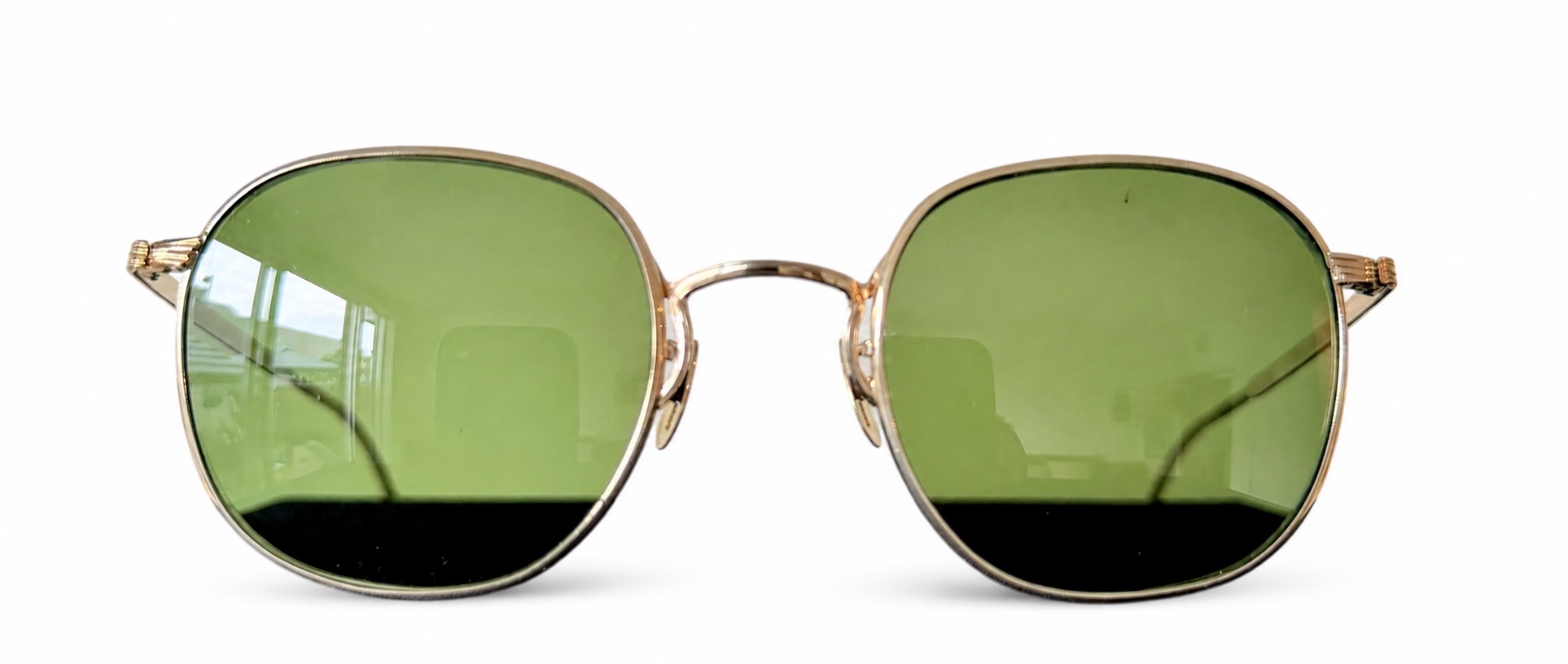
- Follow the temple from the upper corner of the front.
- Later lenses and the period frame are described separately.
Sources: [2]
Plate III: the Wellington front
Archive 28 presents a full tortoise-coloured front with a keyhole bridge. Here the material surrounding the lenses defines the outline continuously, in contrast with the Sirmont’s divided metal-and-brow construction. The front photograph is especially useful for comparing bridge shape and the balance of the upper and lower rims.
A Japanese specialist archive documents a related American Optical AO-Hinge Wellington in a 1950s–60s context. The comparison informs the attribution in the listing. It does not identify a polymer chemically, authenticate the Society’s example independently, or show that the two frames were made in the same year.
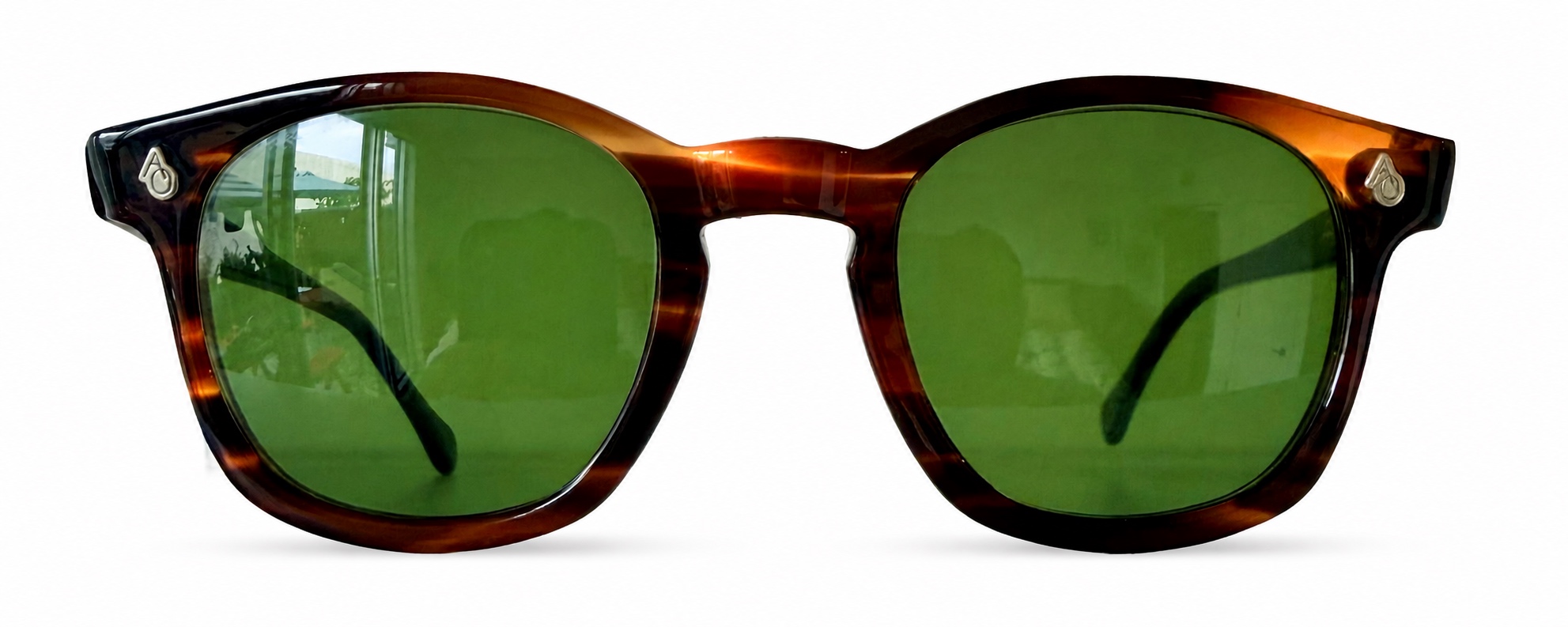
- Compare the continuous rim with the Sirmont’s divided construction.
- A related archive example supplies context, not this object’s missing history.
Sources: [3]
Compare at the level the evidence permits
A front view supports discussion of silhouette and colour; a side view helps with temple placement and curvature; a close-up can record a marking or joint. Those views are complementary. None is improved by adding an exact date unsupported by the record.
For a collector, the useful result is not a universal checklist declaring every American Optical frame authentic. It is a more precise way of looking. Choose the comparable feature, identify the source, and keep the claim at that level. Additional measurements can then describe fit without being confused with historical attribution.
Sources & scope
Object observations refer to the Society’s photographs and owner-supplied catalogue information. External references are identified below; they do not independently authenticate an object in this collection.
- American Optical · Sirmont
Manufacturer’s model history and description of the modern revival.
- GIG LAMPS · Ful-Vue Liner comparison
Different frame and size; a comparative specialist attribution.
- GIG LAMPS · AO-Hinge Wellington comparison
Different frame; comparison of design family and construction.
Research questions or corrections: hello@theraregoodsociety.com