
Field Note 01 / Object study / Tart Optical
Reading an Original Arnel: One Frame, Examined
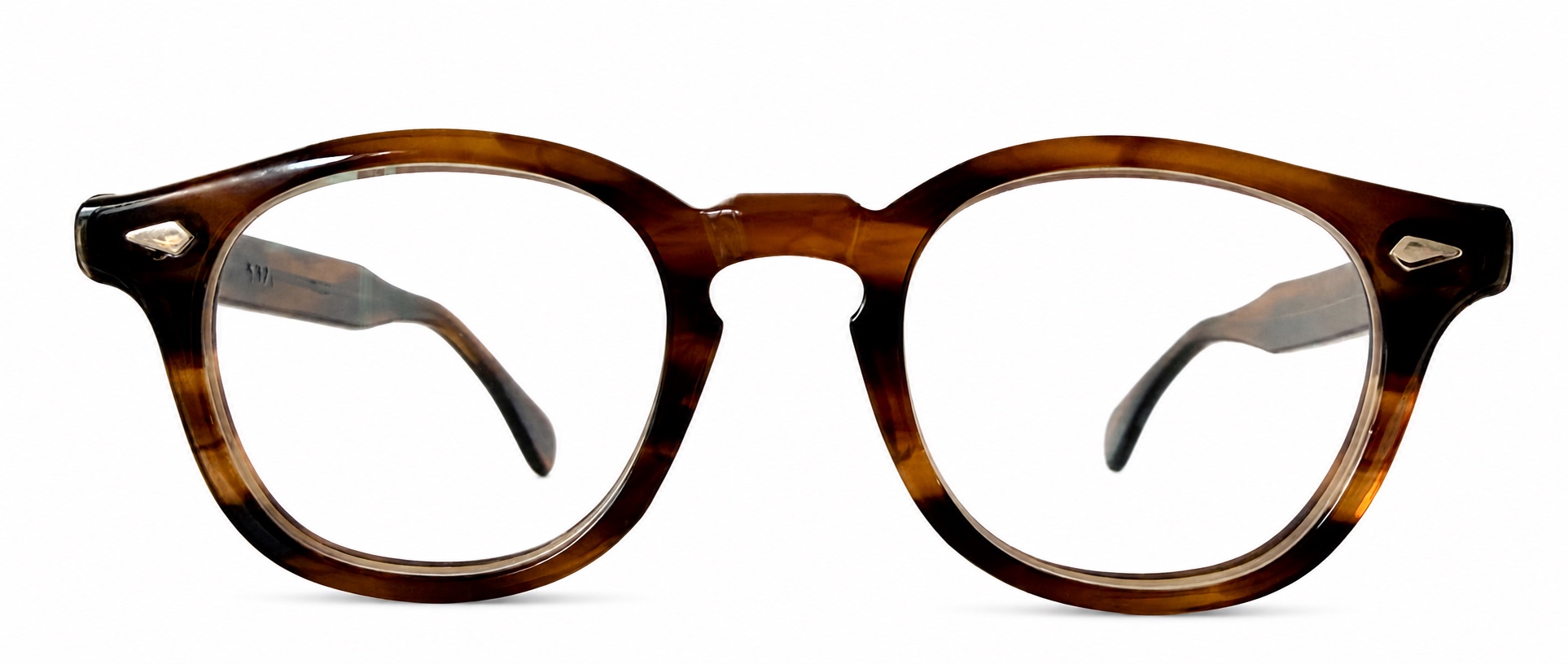
The object before the reputation
The Demi Amber Arnel in this study is catalogued as 44–22, with a 5¾ temple marking. Its appeal begins in the material: dark mottling suspended in translucent amber, with a rounded lens opening and a distinctly shaped keyhole bridge. Those features are visible in the photographs. Its proposed date, circa the 1950s, is an attribution assembled from several features and specialist comparisons; it is not a year read from a dated receipt.
A useful examination keeps three records separate. First comes what the object shows. Second comes what the owner reports about its history and care. Third comes what comparable examples suggest. Agreement among them strengthens an attribution, but none should quietly replace another. This note uses the photographs and owner-supplied catalogue record; it does not represent an independent physical laboratory examination.
Plate I: read the shield and the numeral
The interior temple photograph records the OTE shield and imperial 5¾ marking. The numeral is a marked size, not a fresh measurement of the curved temple. Reading it as such preserves the distinction between manufacturing information and a physical dimension that a buyer may need for fit. Physical measurements remain a separate part of assessing fit.
The surrounding surface matters as much as the lettering. A mark should be examined with its location, depth, orientation and the material around it. A cropped emblem detached from the frame would lose that context. For this reason the plate below uses the unretouched detail photograph, rather than the background-cleaned presentation image available in the product gallery.
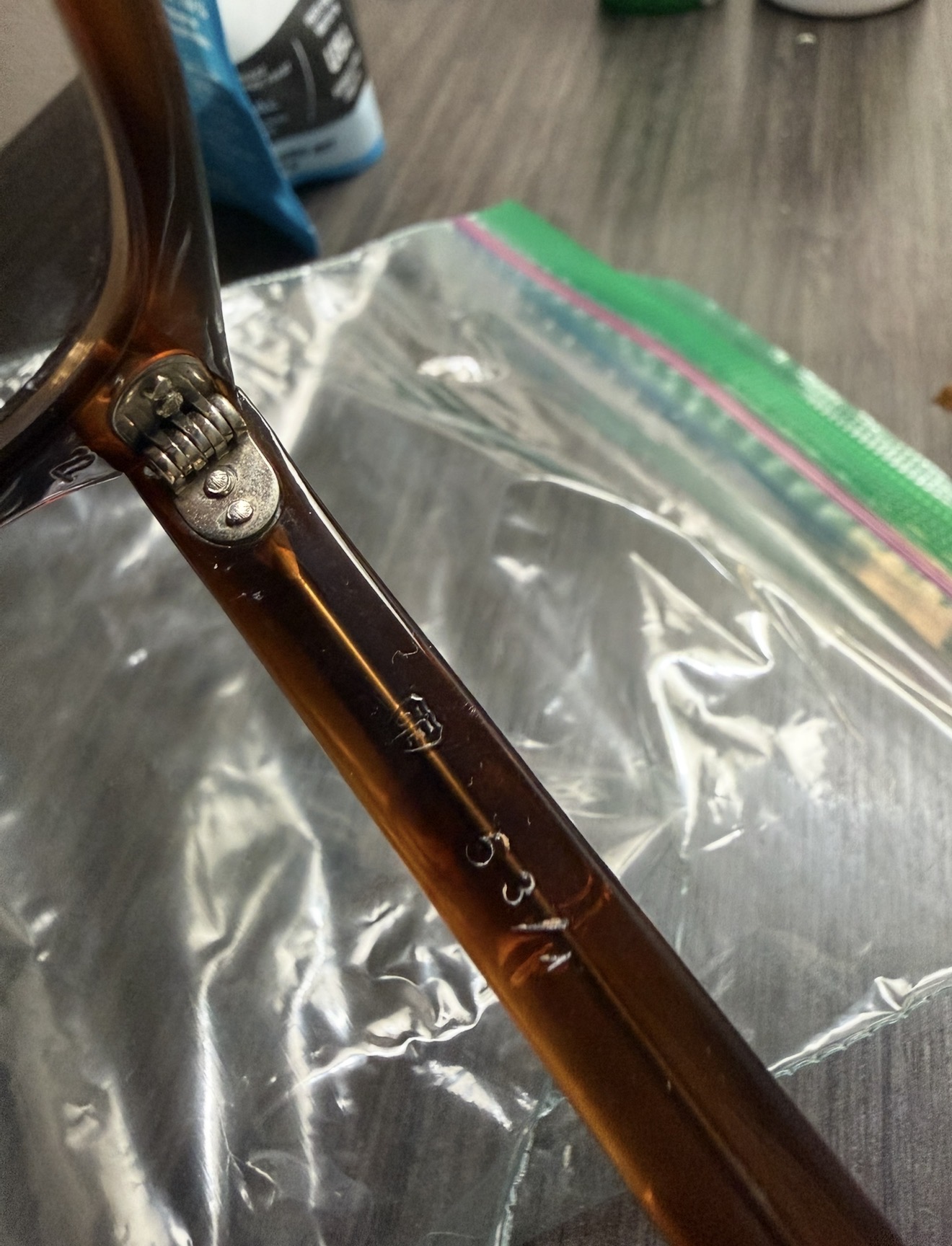
- Read the shield and numeral together.
- The temple marking is recorded exactly; no comparison measurement has been substituted.
Plate II: the hinge as construction
The close-up shows the substantial hinge assembly catalogued as seven-barrel construction. The practical question is not simply how many knuckles are present. Their arrangement, the metal plates, the screw heads, and their relationship to the surrounding frame are all part of the record.
Light patina and tool marks are visible. They should be described, not made to disappear in a promise of untouched condition. The owner reports that the hardware has not been aggressively polished or refinished. That is useful seller information, but a photograph alone cannot establish the complete history of every screw or confirm that no component was ever replaced.
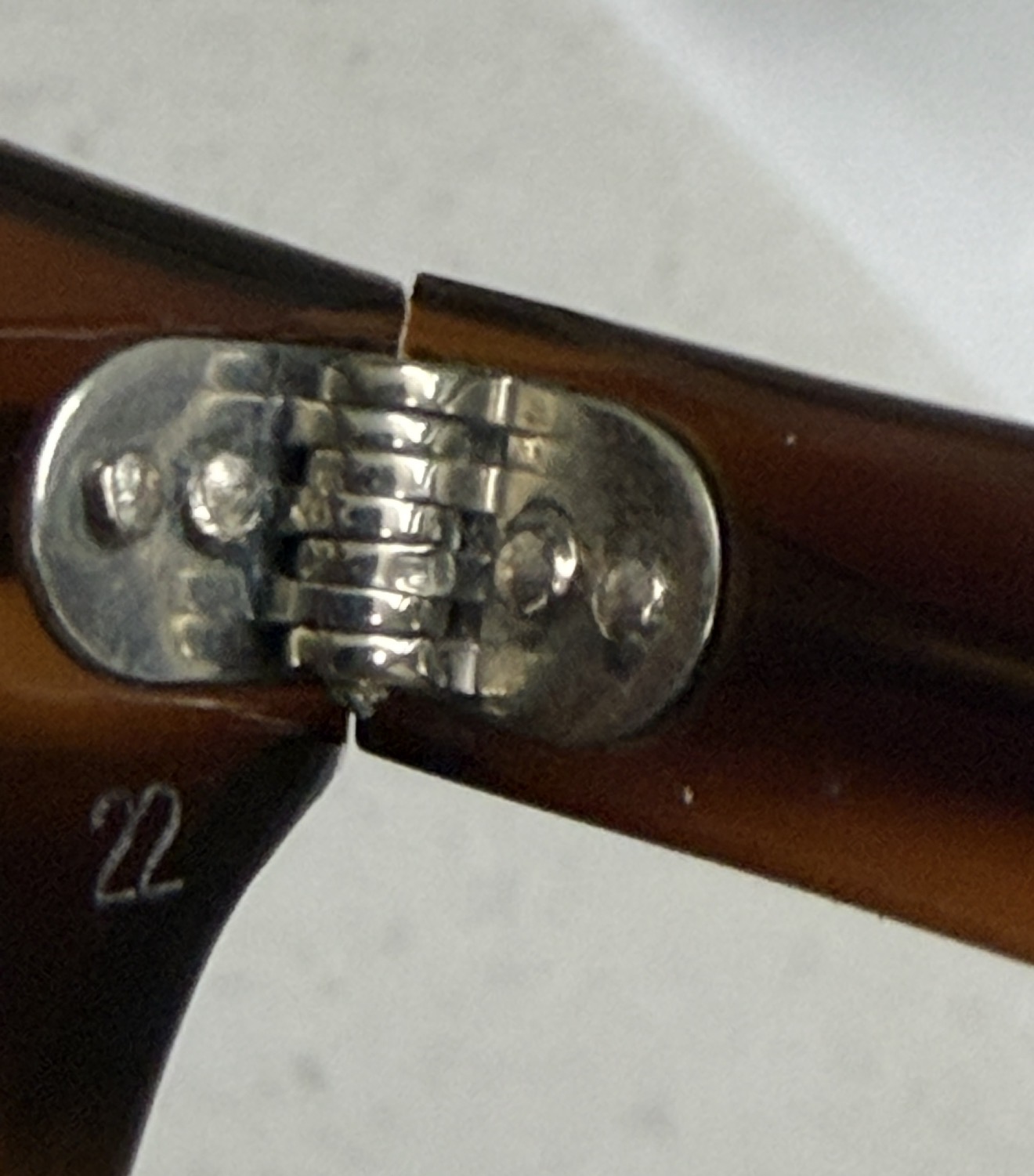
- The close view preserves visible wear.
- A barrel count supports comparison; it is not an authentication verdict by itself.
The Japanese comparison, used precisely
GIG LAMPS documents a separately owned Demi Amber Arnel as an early-type 1950s example in 44/22, recording an OTE mark and a 5¾ temple marking. Its discussion also draws attention to the amber material and older-looking numeral and logo forms. Those are relevant points of comparison for the Society’s frame.
The comparison is not the object being offered here. Its deadstock description, measurements, provenance and dealer’s rarity assessment belong to that other example. We do not transfer them. Nor does a shared colour name guarantee identical material: photographs should be compared for the distribution of dark mottling, the translucency of the base, the proportions of the front, and the construction visible at the temples.
Sources: [1]
What the record supports
Taken together, the photographed construction, recorded markings and specialist comparison support the catalogue description of an early vintage Arnel in Demi Amber, attributed to circa the 1950s. The qualification is part of the description, not a footnote to be hidden.
The present record does not establish an exact manufacturing year, a complete chain of ownership, or celebrity ownership. Clear lenses are fitted; their optical properties are not established by their appearance. Further physical inspection may add information about alignment, repairs and fit. A responsible catalogue can be confident about what it shows while remaining exact about what it has not established.
- Observed: the photographed frame, marking detail and hinge assembly.
- Owner-recorded: 44–22 sizing and the account of recent hardware care.
- Comparative: the circa-1950s attribution.
- Not established: exact year, full ownership history, or famous-person provenance.
Sources & scope
Object observations refer to the Society’s photographs and owner-supplied catalogue information. External references are identified below; they do not independently authenticate an object in this collection.
- GIG LAMPS · Early-type Demi Amber Arnel, 44/22
Japanese specialist catalogue of a different frame; supports comparison, not this object’s provenance or condition.
Research questions or corrections: hello@theraregoodsociety.com